Shiseido White Lucent — 10-second product-formation ad
Everything is built except the footage itself. Flow is refusing to generate right now. 0 of your 400 credits are spent.
1 · The camera move
This is the 3D previz — grey clay on purpose. It is not the look of the ad; it is the instruction Flow follows for the camera and for how the parts come together. It starts almost on the floor at macro distance and climbs through about 170° while pushing in, then comes to a full stop for the hero. The bottle body rises, the pump seats into it, the domed cap lands last. A written prompt cannot do this move — it flattens an orbit into a pan every time, which is the whole reason for building it in 3D.
2 · Your poster is not this product
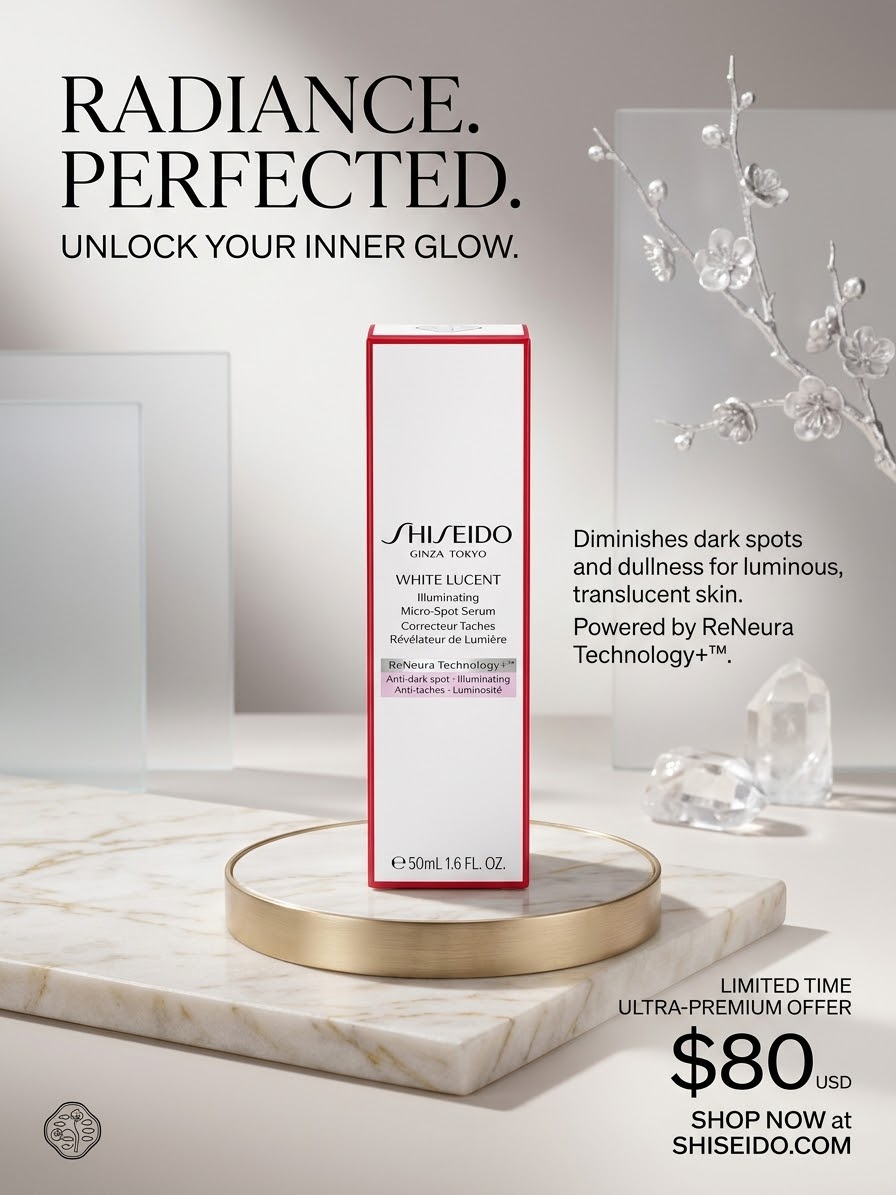
White carton, red frame, “GINZA TOKYO”, a pink claim band, and $80 “limited time”.
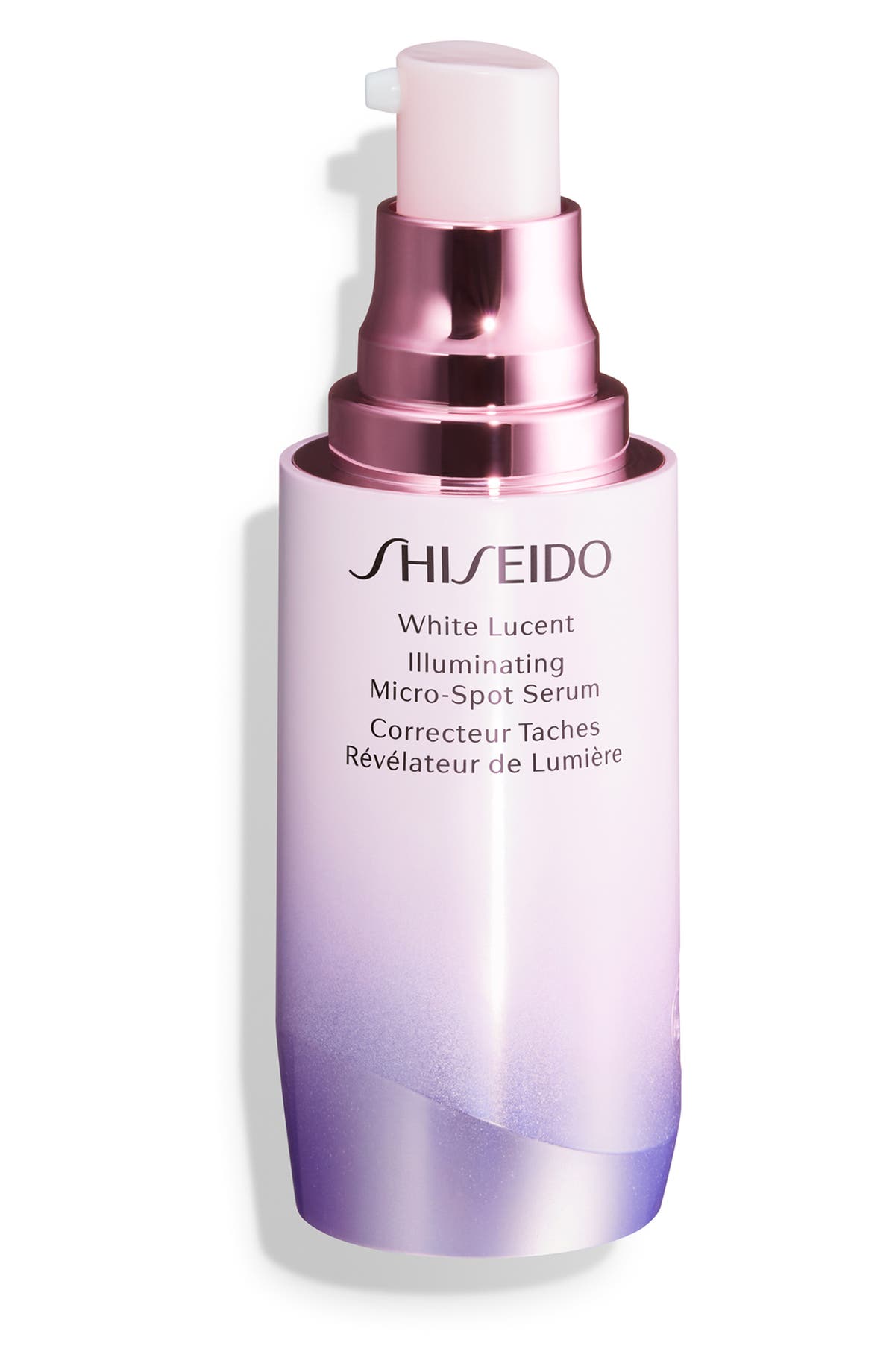
A pump bottle: pale pearl pink for the top three quarters, violet only in the bottom fifth, translucent domed overcap, rose-gold three-tier pump collar. No red anywhere.
- The carton in your poster belongs to a different line (Ultimune / Benefiance). No photograph of this product’s actual retail box exists on any source we could reach — so if a box appears in the film, it is invented. It stays out.
- There is no verified US price. Live pages disagree ($135 vs $185) and Shiseido’s own page for this product is dead. The $80 is invented. No price goes on screen.
- The product looks discontinued in the US — dead product page, Nordstrom says no longer available, missing from Shiseido’s own White Lucent collection. Doesn’t stop a spec piece. Worth knowing.
- The detail most likely to give a fake away: where the violet starts. The small 30 mL bottle turns violet near the middle and that is what models have mostly seen. On this 50 mL it stays pale for three full quarters. Get that wrong and it reads as the wrong bottle instantly.
3 · What the ad will be
- 0.0–0.9s — serum standing on a wet black floor, camera already moving.
- 0.9–3.0s — the bottle rises out of the dark and closes around it; the pump seats; the cap lands last. Each part slows into place with weight.
- 3.0–4.2s — everything settles, camera eases to a stop.
- 4.2–10.0s — locked hero. The wordmark and one line arrive here, over the still frame.
Dark void, wet floor, one hard light raking the glass edge, a caustic on the floor — your pick, and the same treatment Lancôme / Guerlain / Estée Lauder use for serum films. The marble slab, gold ring and plum branch from the poster are gone: a recognisable room drops the tier.
4 · Status
One thing I learned that changes the plan: when a camera reference is attached, Flow will only make a clip shorter than the reference — 10s in gives 8s, 8s gives 6s, 6s gives 5s. So a camera-controlled shot maxes out at 6 seconds. Your 10 seconds is two generations joined on a matched frame, while the camera is already still, so the join is invisible.